CT
Portfolio ↗ Resume ↗

Charan Tadepally · Researcher · Strategist · Leader

16 years of learning what research can do.

I started by learning how to find evidence. Then how to tell its story, influence with it, grow people through it, build partnerships with it, and turn it into action. Somewhere along the way, I took “craft” quite literally. Then technology changed — and so did the questions I was asking.
The journey: Evidence → Narrative → Influence → People → Partnership → Action → Fluency → Possibility → Value
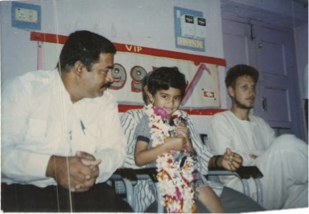
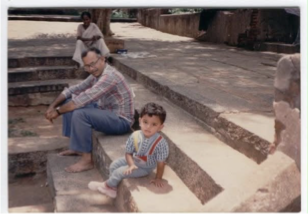
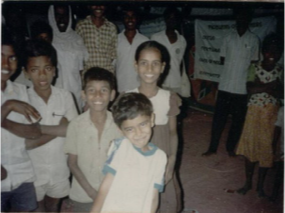
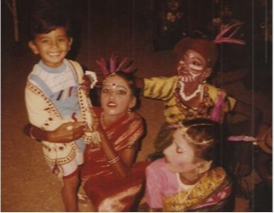
Childhood photograph Childhood photograph Childhood photograph Childhood photograph

I grew up around a rural sociologist. Long before I knew there was a profession called research, I was already travelling, watching, listening and learning that behaviour only makes sense in context.

01

2010–2018

Built the craft.

Before research became strategy, leadership or product building, I had to learn the fundamentals: how to listen, how to make sense of what I heard, and how to make somebody else care.

Research fieldwork Research fieldwork Research fieldwork Research fieldwork
Nielsen · 2010–2012
What I learnt

Evidence

I learnt the craft on the ground — moderating groups, conducting interviews and ethnographies, observing people in context and learning to separate what was interesting from what was actually evidence.

Listen before you explain.
Awards & recognitionNielsen Best Qualitative Researcher
Global Shared Success Program — Silver Award
FCB · 2012–2014
What I learnt

Narrative

Advertising taught me that a good insight does not travel on evidence alone. It needs a point of view, a story and a reason for someone to remember it.

Evidence needs a story before it can move people.
Kantar · MENA · 2014–2018
What I learnt

Influence

Working across markets, brands and shopper contexts pushed me beyond reporting what I had learnt. Research had to help clients see the problem differently and make a better decision.

Insight earns its keep when it changes the conversation.
Awards & recognitionDelight Star Award — Best Qualitative Researcher
Star Award — Most Promising Researcher & Excellent Overall Performer
Highly Commended NeedScope Qualitative Project
Global Signature Achiever
02

2018–2022

Put the craft to work.

I stopped thinking only about doing good research. I began using the craft to grow researchers, build a business, earn trust — and eventually drive action from inside the organisation I had spent years studying.

Nielsen · 2018–2020 · Qualitative Research Head

People

Built the qualitative research team from 3 to 10, combining junior and senior talent and creating hands-on ways to strengthen judgement: recruitment puzzles to sharpen screener logic, movie-analysis workshops to practise concise storytelling, and group critiques of past work.

Nielsen research team
How I ledI joined the exercises rather than standing outside them, made it safe for researchers to challenge my thinking, and used quarterly Start / Stop / Continue feedback in both directions — for the individual and for me as their manager. Many researchers I mentored went on to roles at Meta, Amazon, IBM, PhonePe, Practo and Hindustan Unilever.
The craft scales when you stop being the only person practising it well.
Awards & recognitionCI Star Performer for Exceptional Performance
Simply Excellent — Gold & Silver Awards
Nielsen × Flipkart

Partnership

Flipkart became much more than an account. I worked across most of its major categories — mobiles, furniture, baby care and toys, grocery, large and small appliances — and grew from research supplier to trusted partner.

That work included category Usage & Attitude studies, research into the influencer economy in 2019–20, mobile gaming and gamification, and a major brand equity and positioning programme that helped shape Flipkart's focus on “Bharat.”

The clearest proof of the partnership? Flipkart eventually hired me to join the organisation.
Flipkart · 2020–2022 · Senior Manager → Associate Director

Action

Once inside, the research study stopped being the centre of the universe. I could combine primary research with internal analytics, category data, behavioural signals, stakeholder knowledge and market evidence. There was no hierarchy to where insight came from; the question was what combination of evidence would get us closer to the right action.

Segmentation as infrastructure

Led large-scale segmentation programmes across Mobiles, Large Appliances and Small Appliances. In Mobiles, I challenged a segmentation that was difficult to activate, reframed it around price and Tech Quotient, mapped the external segments to Flipkart's own shopper database, and worked with analytics and product teams to turn those segments into experiments and personalised interventions.

Premium Store for premium shoppers

Research into premium mobile shoppers moved beyond describing the audience to shaping the shopping experience for them. The work informed a dedicated premium-store proposition and the content, information and experience cues needed to make Flipkart more credible for high-value mobile purchases.

FSUP and the offline gap

Studied what physical retail gave shoppers that online commerce did not and translated those gaps into product opportunities. This body of work fed into FSUP and related interventions spanning assisted shopping, vernacular voice, product comparison, AR/Flipkart Camera and richer premium-shopping experiences.

Always-on category intelligence

Launched periodic brand tracks across Mobiles, Large Appliances, Small Appliances, Furniture, Beauty, Grooming and General Merchandise, evaluating the purchase funnel against key competitors and giving teams a recurring view of category health.

Research → database → experiments

Worked with analytics and product teams to cluster the last six months of Flipkart mobile shoppers using variables from the external segmentation, map the two worlds, and validate the mapping through experiments such as personalised communication and feature highlighting.

Cross-functional action

Ran workshops with category, brand and design teams to prioritise what should be actioned, turning a large research programme into usable segment frameworks, ready reckoners, product concepts and business decisions rather than leaving it as a report.

One mobile programme moved from segmentation → concepts → evaluation → launch.

₹150 Crincremental GMV
130Kincremental units sold
+500 bpspurchase conversion
Leading research at FlipkartLed a team of three researchers with clear goals and individual growth paths. Weekly market scans encouraged the team to spot shifts early and form proactive hypotheses; reflective sessions revisited earlier work to ask what we would do differently with new evidence, tools or methods.
Award & recognitionFlipkart Impact Award — Mobile Consumer + Platform Segmentation
Research became less about delivering the answer and more about creating the conditions for something to happen.
PAUSE

2022

I took the craft quite literally.

After twelve years of researching people, brands and products, I took a sabbatical because I simply wanted to learn how to make furniture.

Furniture workshop Chair in progress Sawdust on hand Woodworking detail At the furniture workshop

I could picture what I wanted to create. But carpenters worked in materials, joints, dimensions and mechanics, a language I did not understand. To translate an idea into something buildable, I had to understand enough of their world to collaborate with them — without pretending to become the expert.

Fluency
I thought I was learning to make furniture. I was also learning how to work meaningfully in a world whose technical language was not mine. A few months later, that lesson became unexpectedly useful.
03

2022–Present

Reimagined what the craft could do.

I moved into product building just as technology itself was changing. Research became a way to explore experiences that did not yet exist — while keeping human needs, trust and value at the centre of increasingly intelligent systems.

Microsoft · 2022–2026 · Power Pages

Possibility

I entered a world of engineers speaking CSS, Java, Python, APIs and ALM. The furniture lesson returned: I did not need to become an engineer, but I needed enough technical fluency to ask better questions and collaborate credibly.

I built the Power Pages research function at IDC and helped lead the product into AI — from low-code/no-code towards Copilot, vibe coding, smart-code and agentic experiences — across makers, professional developers, admins and end-browsers.

Microsoft AI research session
AI in the pro-developer workflow · 2023Where could AI meaningfully enter professional developer workflows as generative AI began reshaping product development?
Browsers × chatbots × AI assistantsHow do end-browsers experience chatbots, where do those interactions fail, and how can AI assistants create better conversations?
Human–AI interaction through MaslowUsed a hierarchy-of-needs lens to understand how expectations from AI could evolve for makers and browsers.
AI expectation trend mapping · 2023 → 2025Tracked how maker expectations shifted over time to inform product prioritisation and strategy.
Enterprise vibe-coding · 2025Reframed AI value around what enterprise makers experience outside Microsoft, surfacing the speed-versus-safety tension and establishing a strategic foundation for Power Platform's AI roadmap.
WebvolutionReimagined websites as intelligent, responsive entities with personalisation, accessibility optimisation and automated maintenance.
Agentic scenarios for makers + end-browsersMapped workflows and pain points to identify work an AI agent could take on or materially ease.
Anthropomorphism + trustStudied how an AI assistant should “talk” and what interaction behaviours help establish trust.
Microsoft team Microsoft research colleagues Microsoft research team
Microsoft · Beyond AI

Product, security and behaviour

ALM · Security mindset among low-code/no-code makers · AI in security management · Tech inertia through COM-B · Pro-code → low-code · Continuous Power Pages diagnostics across onboarding, adoption blockers, Copilot, Design Studio and feature discovery.

Microsoft · Research leadership

Built more than studies.

Created ResearCharan to demystify research for PMs, EMs and Designers; founded the UXR Chaat Room to connect researchers across Microsoft India; experimented with creative participant recruitment; and brought behavioural frameworks such as COM-B, Maslow, AIDA and TAM into product conversations.

Awards & recognitionWinner — Microsoft Hackathon, Prompts to Permissions
Selected twice to present at Microsoft UXR Days
ServiceNow · 2026–Present · AI

Value

The question evolved again. Once organisations can build AI, how do they know it matters?

My work examines how partners and customers move AI from ambition to implementation: AI value, ROI and baselines; adoption and measurement; AI Control Tower; Agent Studio; POC-to-production economics; governance; trust; evaluation signals and the metrics that make an AI investment defensible.

“Can we build it?” eventually becomes: “Should we build it this way, on this platform, at this cost — and how will we know it worked?”

Ask the journey

You've seen my version. Explore yours.

This version uses guided questions. The live conversational agent will be wired to a richer knowledge base once that source pack is ready.

Choose a question.

The spine

Evidence → Narrative → Influence → People → Partnership → Action → Fluency → Possibility → Value.

The methods changed. The problems changed. The technology changed. The job remained remarkably consistent: understand people well enough to make better decisions.

Leadership, across the journeyMy style has stayed participative: listen deeply, create space for challenge, set clear outcomes, develop people deliberately, and keep feedback two-way. At Nielsen that meant building and coaching a 3→10 team; at Flipkart, growing strategic thinking and proactive research in a three-person team; at Microsoft, influencing research quality and culture without formal reporting lines.